
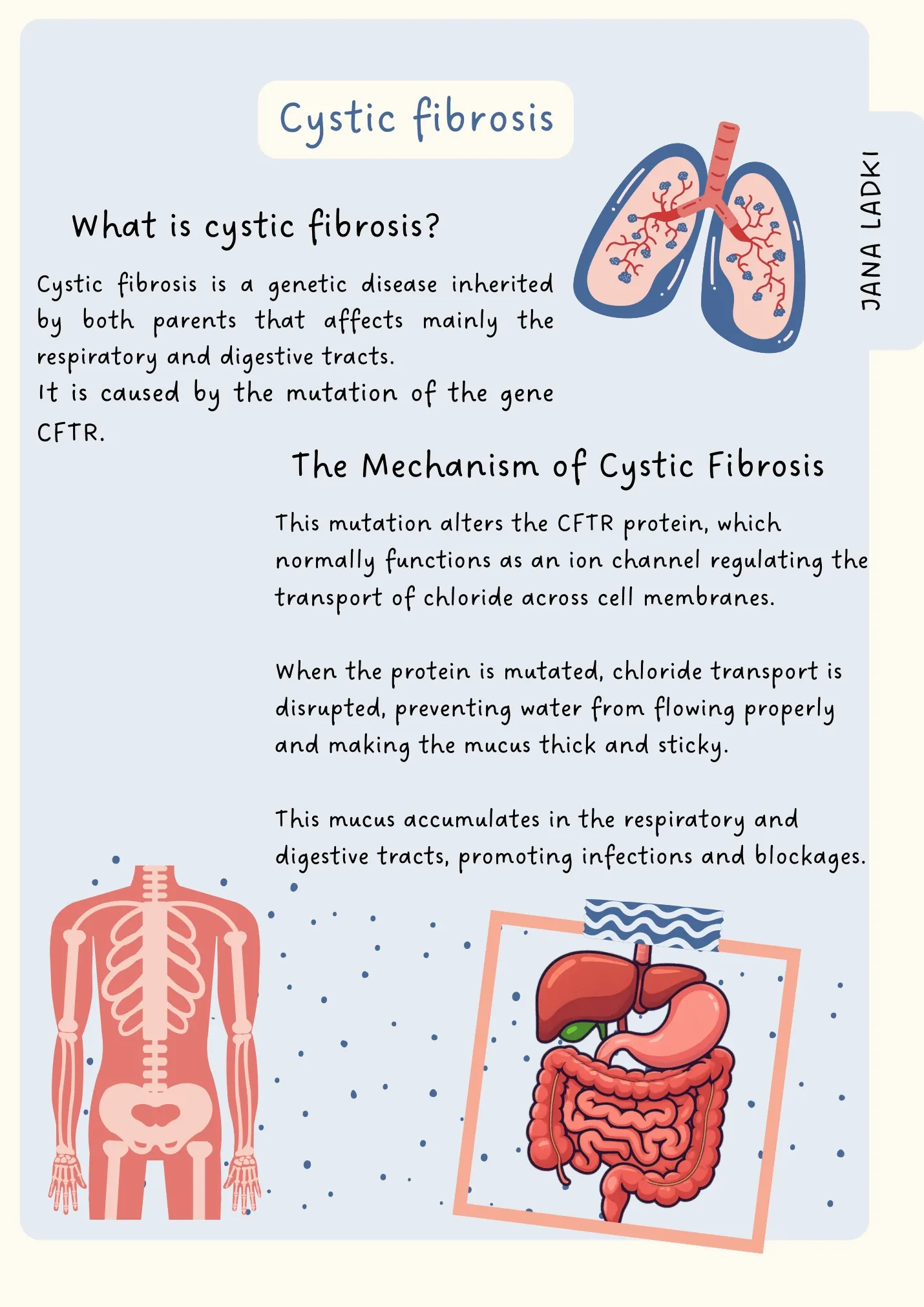
What is cystic fibrosis?
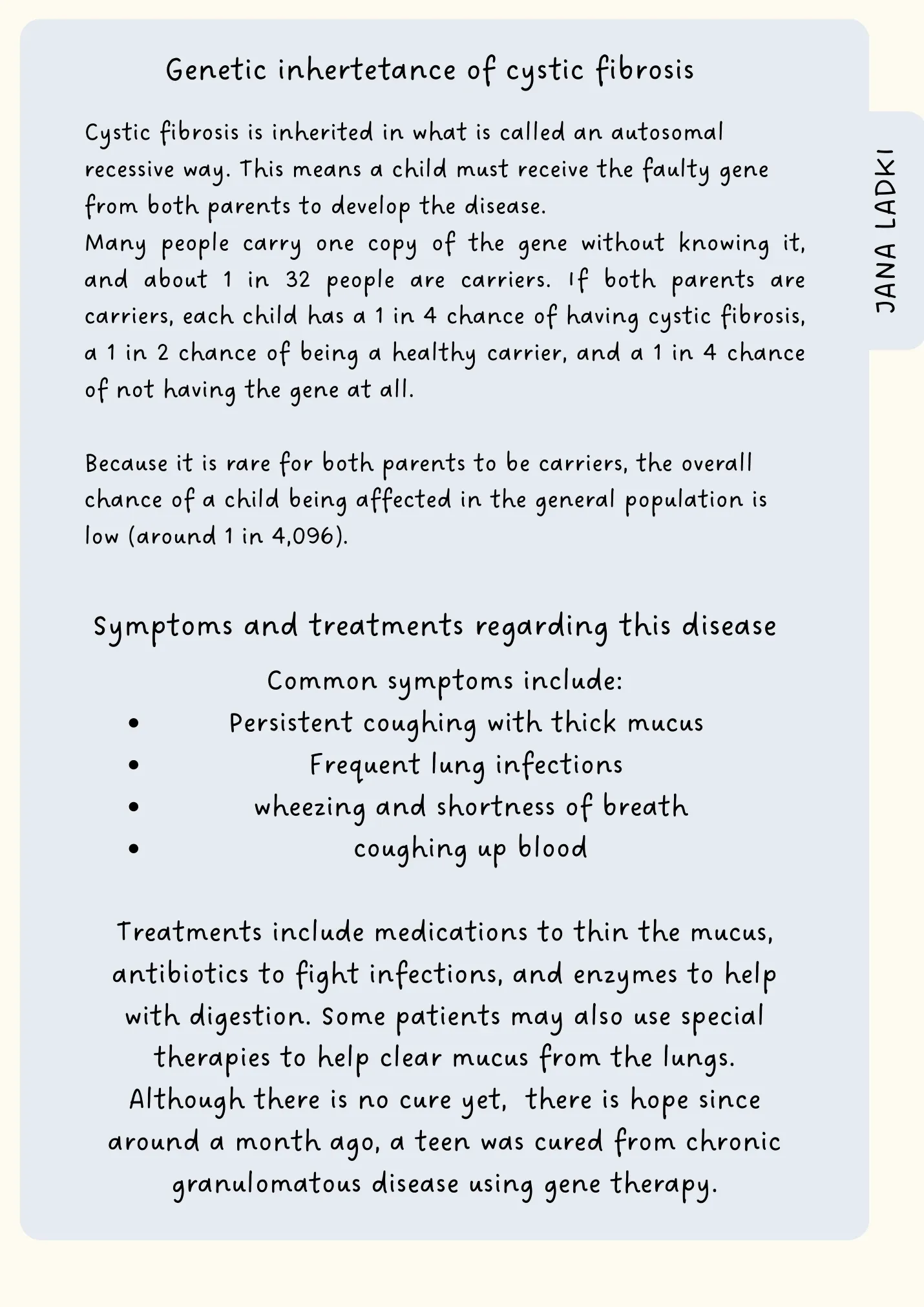
Cystic fibrosis is a genetic disease — one you inherit from both parents — that mainly affects the respiratory and digestive tracts. It’s caused by a mutation in a single gene called CFTR.
That one gene matters more than its size suggests. The CFTR gene carries the instructions for the CFTR protein, and when the instructions are wrong, the whole system downstream goes wrong with it.
The mechanism
Normally, the CFTR protein acts as an ion channel — a tiny gate in the cell membrane that controls the movement of chloride in and out of cells. Where chloride goes, water follows.
When the protein is mutated, chloride transport is disrupted. Water can no longer flow the way it should, and the mucus that lines your airways and gut turns thick and sticky instead of thin and slippery.
Picture a gate that’s supposed to let salt through so water can follow. Jam the gate, and everything dries out and clogs up.
That thick mucus then accumulates in the respiratory and digestive tracts, where it promotes infections and blockages — the root of most of the disease’s symptoms.
How it’s inherited
Cystic fibrosis is passed on in an autosomal recessive way. That means a child has to receive the faulty gene from both parents to develop the disease.
Many people carry a single copy of the gene without ever knowing it — about 1 in 32 people are carriers. If both parents happen to be carriers, then for each child there’s a:
- 1 in 4 chance of having cystic fibrosis,
- 1 in 2 chance of being a healthy carrier, and
- 1 in 4 chance of not carrying the gene at all.
Because it’s relatively rare for both parents to be carriers, the overall chance of a child being affected in the general population is low — around 1 in 4,096.
Symptoms and treatment
Common symptoms include:
- Persistent coughing with thick mucus
- Frequent lung infections
- Wheezing and shortness of breath
- Coughing up blood
There’s no cure yet, but treatment has come a long way. It includes medications to thin the mucus, antibiotics to fight infections, and enzymes to help with digestion. Many patients also use physical therapies to help clear mucus from the lungs.
And there’s real reason for hope. Gene therapy — fixing the faulty instructions at the source — is advancing fast: only about a month ago, a teenager was cured of chronic granulomatous disease using gene therapy. The same kind of approach is exactly what researchers are chasing for conditions like cystic fibrosis.
This article is part of Weekly Insights — written to make medical topics clear, not clinical. It isn’t medical advice; for anything about your own health, talk to a doctor.
Sources: (placeholder — add the references this article drew on.)

Keep reading
Related insights

Sickle cell anemia, explained
Why a change in the shape of a single cell can block blood vessels, cause pain, and shorten lives, and why it's so common in some parts of the world.
Naegleria fowleri, explained
Meet the brain-eating amoeba. How a single-celled organism in warm freshwater can trigger a rare, fast-moving and almost always fatal brain infection.