
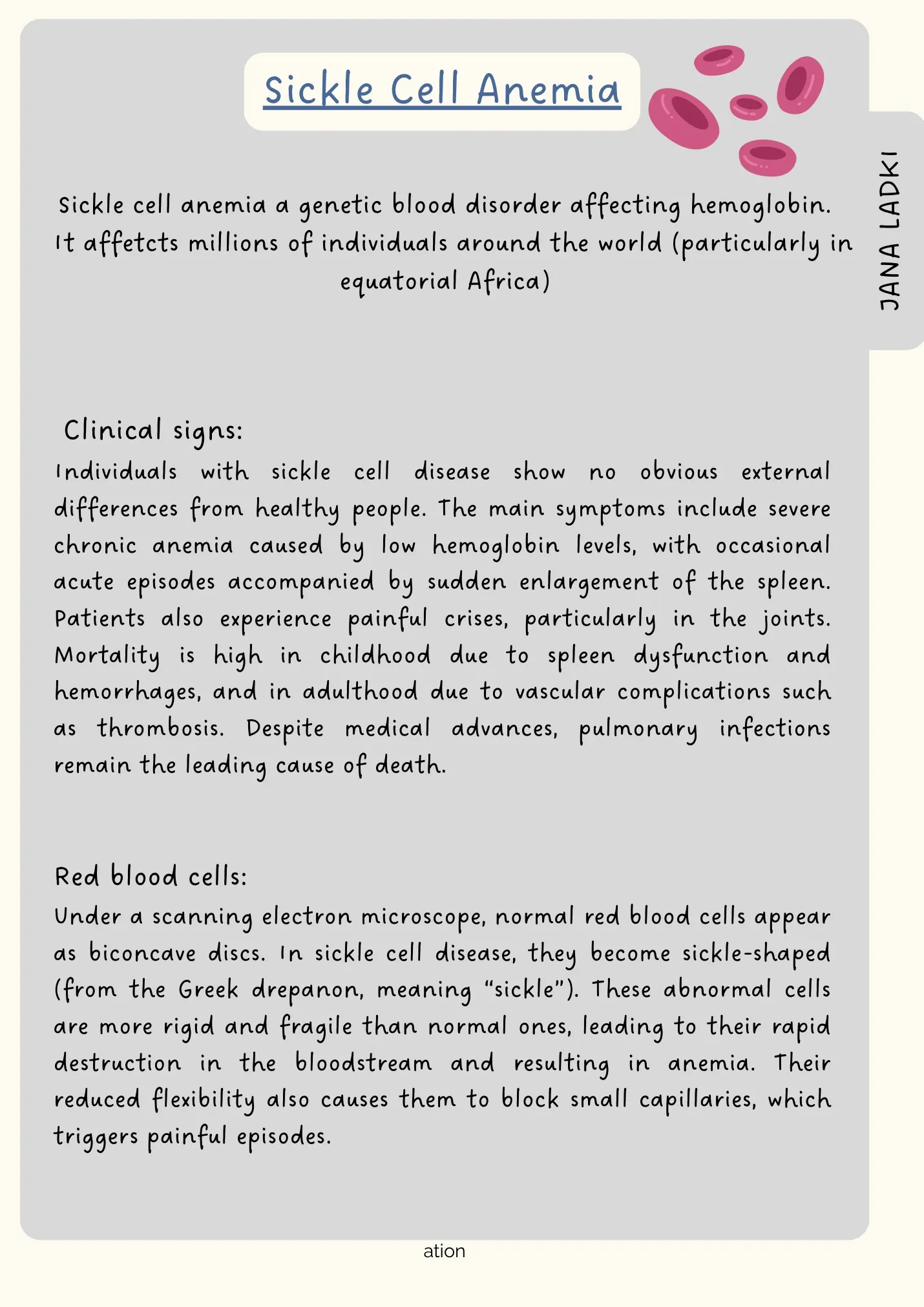
Sickle cell anemia is a genetic blood disorder that affects hemoglobin — the molecule inside red blood cells that carries oxygen around the body. It affects millions of people worldwide, particularly in equatorial Africa.
A change of shape
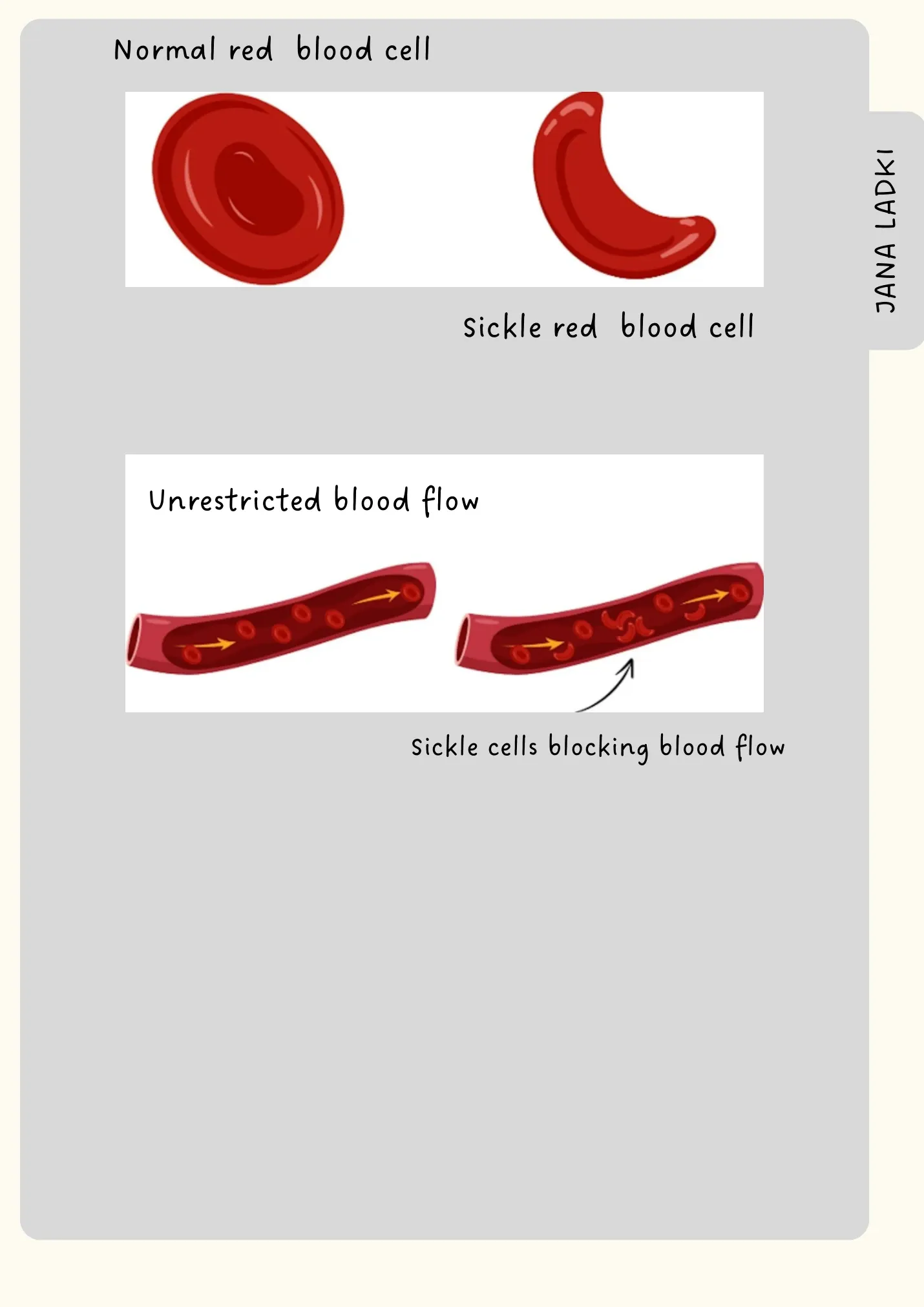
Under a microscope, healthy red blood cells look like smooth biconcave discs — round, flexible, and able to squeeze through the body’s narrowest vessels.
In sickle cell disease, they take on a curved, sickle shape (the name comes from the Greek drepanon, meaning “sickle”). These abnormal cells are more rigid and fragile than normal ones.
That combination causes two problems:
- They break apart quickly. Fragile cells are destroyed faster than the body can replace them — and that shortage of red blood cells is exactly what anemia means.
- They get stuck. Because they’re stiff and oddly shaped, sickle cells block small capillaries, cutting off blood flow and triggering sudden, painful episodes.
Clinical signs
People with sickle cell disease usually show no obvious outward signs. The main features are:
- Severe chronic anemia from persistently low hemoglobin
- Acute episodes, sometimes with sudden enlargement of the spleen
- Painful crises, especially in the joints
Mortality has historically been high — in childhood from spleen dysfunction and hemorrhages, and in adulthood from vascular complications such as thrombosis. Despite real medical advances, pulmonary (lung) infections remain the leading cause of death.
Understanding the disease at the level of a single cell is what makes the bigger picture make sense: change the shape of the cell, and you change everything that blood is supposed to do.
This article is part of Weekly Insights — written to make medical topics clear, not clinical. It isn’t medical advice; for anything about your own health, talk to a doctor.
Sources: (placeholder — add the references this article drew on.)

Keep reading
Related insights
Cystic fibrosis, explained
One faulty gene, one misbehaving protein, and why it makes mucus thick and sticky. A clear look at how cystic fibrosis works and how it's treated.

Naegleria fowleri, explained
Meet the brain-eating amoeba. How a single-celled organism in warm freshwater can trigger a rare, fast-moving and almost always fatal brain infection.